
Being together in Szeged – Closing the Guide to Health Erasmus+ journey
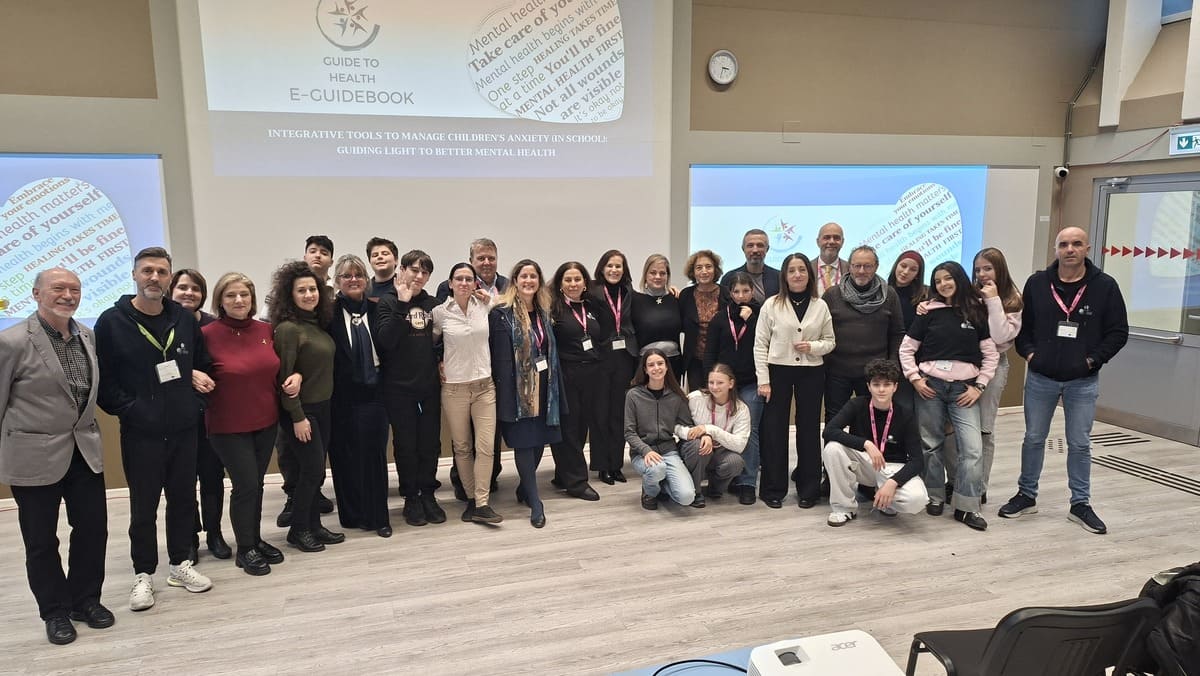
On 18 December 2025, we met in Szeged for what was officially the closing conference of the Guide to Health Erasmus+ project. For most of us, though, it didn’t feel like an ending. It felt more like a moment to slow down, finally sit together in the same room, and realise how much had happened over the past two years.
The project was coordinated in Hungary by Qualitas T&G Ltd., an organisation that has been working with schools for almost thirty years. Throughout the Guide to Health project, that long experience really showed: the focus was always on what actually works in schools, not on what only sounds good on paper. The professional coordination was led by Éva Rózsahegyi, Erika Krämmer and Dr Gabriella Spengler, who kept reminding us of one simple thing – if we talk about mental wellbeing, it has to be real, practical and human.
From the start, the project was shaped by everyday school reality. We all see it: students who are tired, anxious, overwhelmed – and teachers who often feel the same way. The question was never “what is the perfect system?”, but rather “what can we realistically do, here and now, with the students in front of us?”. Movement, shared activities, music, drama and art became our main tools, because these are things students respond to naturally.
A day that belonged to students too
What made the closing conference special was who took part. Of course, there were teachers, trainers, psychologists and school leaders. But there were also students. Not just from Hungary, but from our partner countries as well. Their presence changed the tone of the whole day. Conversations became more open, more direct. This was not an event speaking about young people – it was something created with them.
We started the morning with an opening talk by Dr Szilvia Jámbori, psychologist and university lecturer. She spoke in a calm, grounded way about what young people are carrying today, emotionally speaking, and about the responsibility schools have – not to fix everything, but to notice, to listen, and to provide safe spaces.
Meeting the schools behind the project
Later, the partner schools introduced themselves, and this was one of the moments when the project really became three-dimensional.
The Italian Istituto Comprensivo Perugia 2 spoke about their Montessori-based approach and how observation and trust shape everyday school life for nearly 1,000 students. Listening to them made it clear how strongly emotional development is woven into learning there.
From Greece, 6o Gymnasio Patras shared their experience of inclusive education in practice. In a relatively small school, a significant number of students have special educational needs, supported by dedicated professionals and flexible structures. What stood out was how naturally creativity and inclusion are connected in their daily work.
The Portuguese partner, Agrupamento de Escolas de Arrifana, represents a network of 15 schools. Many of their students come from disadvantaged backgrounds, and yet their presentation focused less on difficulties and more on community, belonging and long-term commitment. Their experience with international cooperation was visible in how confidently they spoke about change.
When ideas turned into movement
In the afternoon, the focus shifted completely. Students and teachers from different countries stepped into the space together and shared short performances and activities developed during the project. There was movement, music, quiet moments, laughter. Nothing felt staged. These were not “presentations”, but lived experiences showing how emotions can be explored without many words.
Discovering the city together
During their stay, our partners also had time to get to know Szeged beyond the conference room. One evening, we went together to see The Nutcracker, performed by the Szeged Contemporary Ballet. It was one of those shared cultural experiences that people later keep referring back to in conversations.
Another memorable part of the visit was a playful city walk inspired by the Hungarian story “Laci and the Lion.” The story is about a shy boy who slowly becomes braver with the help of a friendly lion, only to realise that the courage was always inside him. Following this idea, we explored the city by looking for lion figures across Szeged. It was light, a bit symbolic, and surprisingly fitting for everything the project had been about.
Not really an end
At our final meeting, the conversation naturally turned to the future. No big declarations – just honest questions about how we might continue working together, what could come next, and whether there might be another project waiting somewhere down the line.
When we finally said goodbye, it was clear that something would continue, even if we didn’t yet know exactly how. The Guide to Health project left us with shared experiences, familiar faces, and the sense that working across countries really does make everyday school life richer.
That, in the end, was probably the most important result of all.